







 Position:
Commercial Mochi Ice Cream Encrusting Machine with Servo Control System
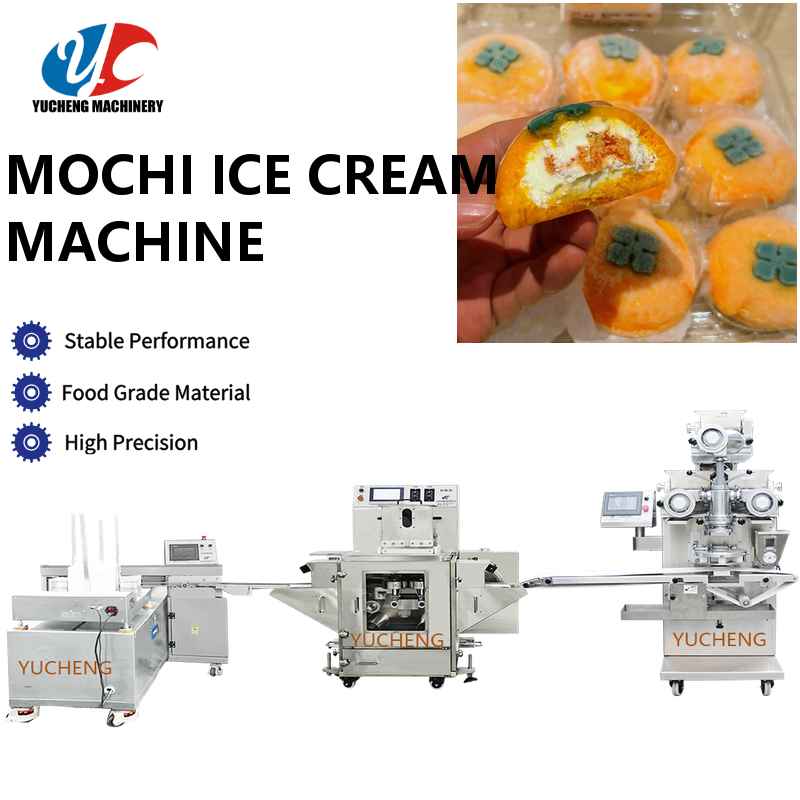
This article introduces the Commercial Mochi Ice Cream Encrusting Machine with Servo Control System—a 5-in-1 production line integrating YC-170 Automatic Encrusting Machine, YC-23 Imitate Handmade Flour Coating Machine, YC-150 Tray Aligning Machine, YC-136 Mochi Dough Steaming & Mixing Machine, and YC-135 Steam Generator. It covers core features like automatic tray supply, customizable plastic trays, and 10-90 pcs/min speed, helping businesses optimize mochi ice cream manufacturing.
In the fast-growing global frozen dessert market, mochi ice cream has emerged as a beloved treat, blending the chewy texture of traditional mochi with the creamy goodness of ice cream. For industrial manufacturers looking to scale production efficiently, our full automatic mochi ice cream production line offers a seamless, high-performance solution. Composed of 5 specialized machines—YC-170 Automatic Encrusting Machine, YC-23 Imitate Handmade Flour Coating Machine, YC-150 Automatic Tray Aligning Machine, YC-136 Rice Flour Mixing and Evaporating Steamer (150L), and YC-135 Steam Generator (with Water Softener)—this line streamlines every step of production, from mochi dough preparation to final tray packaging, eliminating manual labor and ensuring consistent quality.
Machine Working Videos
1. Detailed Introduction & Specifications
Each machine in our production line is engineered to perform a specific, critical role in the mochi ice cream manufacturing process. Below is a breakdown of their functions, along with detailed technical specifications to help you evaluate their fit for your industrial needs.
1.1 YC-170 Automatic Encrusting Machine (Core Mochi Ice Cream Forming Machine)
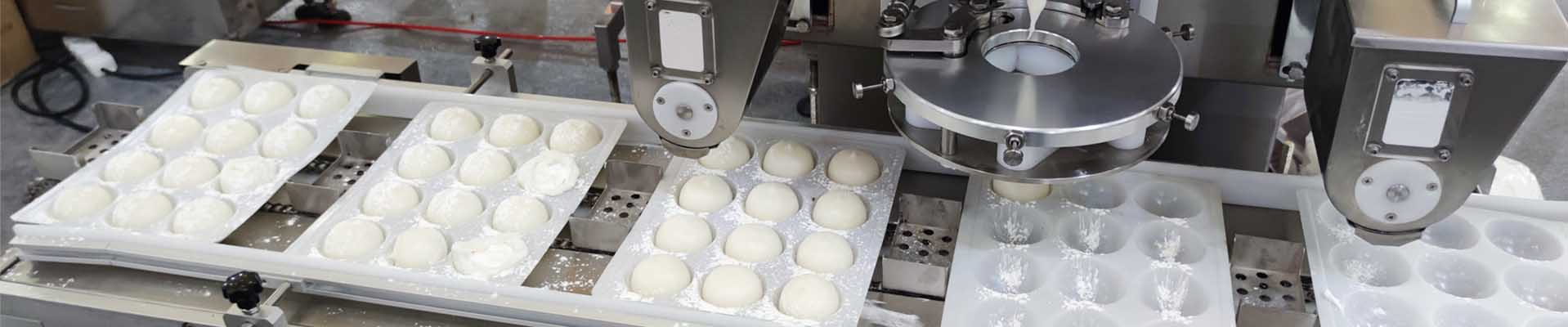
The YC-170 is the heart of the production line, responsible for the core task of encrusting ice cream fillings with mochi dough. It automates the process of wrapping creamy ice cream centers with chewy mochi, ensuring uniform thickness, consistent shape, and no leakage. What sets it apart is its ability to directly place the formed mochi ice cream into small plastic trays—eliminating the need for manual picking and handling, which saves labor and reduces contamination risks. The plastic trays are automatically supplied by the machine, and their size can be customized to hold 2, 4, 6, 8, or 10 pieces of mochi ice cream, depending on your market needs.
| Specifications | Details |
|---|---|
| Capacity | 10-100pcs/min |
| Product Weight | 10-100g |
| Power | 2KW |
| Electricity | 220V, 50/60Hz, 1Phase |
| Dimension | 1670x920x1750mm |
| Weight | 310KG |
1.2 YC-23 Imitate Handmade Flour Coating Machine
After the mochi ice cream is formed, the YC-23 applies a thin, even layer of flour to the surface. This step is essential to prevent the sticky mochi from adhering to trays, equipment, or other pieces during subsequent processing. The machine mimics the precision of manual flour coating—ensuring no excess flour (which would affect taste and appearance) and no missed spots. It also features a dust absorption system to reduce flour dust in the production environment, maintaining a clean and safe workspace.
| Specifications | Details |
|---|---|
| Capacity | 10-90pcs/min |
| Product Weight | 10-100g |
| Power | 1.1KW |
| Electricity | 220V, 50/60Hz, 1Phase |
| Dimension | 1300x700x1300mm |
| Weight | 200KG |
1.3 YC-150 Automatic Tray Aligning Machine
Following flour coating, the YC-150 takes over to automatically align and arrange the mochi ice cream-filled trays. It ensures that each tray is properly positioned for subsequent processes—such as quick freezing or vacuum packaging—eliminating manual tray alignment and reducing errors. The machine’s high capacity (matching the output of the YC-170) ensures a smooth, continuous flow of production, with no bottlenecks.
| Specifications | Details |
|---|---|
| Capacity | 10-100pcs/min |
| Product Weight | 15-1000g |
| Power | 1.5KW |
| Electricity | 220V, 50/60Hz |
| Dimension | 1680x1650x920mm |
| Weight | 280KG |
1.4 YC-136 Mochi Dough Steaming & Mixing Machine (150L)
The foundation of great mochi ice cream is high-quality mochi dough—and the YC-136 is designed to produce just that. This machine combines mixing and steaming in one unit: it first mixes rice flour (and other ingredients) into a smooth batter, then steams it to achieve the chewy, elastic texture that defines mochi. With a 150L capacity, it can produce large batches of dough to keep up with high-volume industrial production, and its adjustable rotation speed allows for customization of dough texture.
| Specifications | Details |
|---|---|
| Model | YC-136 Mochi Dough Steamer |
| Capacity | 150L |
| Rotation Speed | 15-45 RPM (Revolutions Per Minute) |
| Power | 380V, 4KW |
| Weight | 680KG |
| Dimension | 1550x1200x1600mm |
| Steam Pressure | 0.6Mpa |
1.5 YC-135 Steam Generator (with Water Softener)
To ensure consistent, high-quality steaming for the mochi dough, the YC-135 Steam Generator provides a steady supply of clean, dry steam. It is paired with a water softener to remove impurities (such as calcium and magnesium) from the water, preventing scale buildup in the generator and the YC-136 steamer. This not only extends the lifespan of the equipment but also ensures that the steam does not affect the taste or texture of the mochi dough. The generator features fully automatic control, making it easy to operate and maintain.
YC-135 Steam Generator Specifications
| Specifications | Details |
|---|---|
| Product Model | YC-135 Steam Generator |
| Heating Power | 24KW |
| Capacity (Steam Output) | 34kg/h |
| Steam Temperature | 171°C |
| Power Supply | 380V/50HZ |
| Heat Output | 20640kcal/h |
| Steam Pressure | 0.7Mpa |
| Dimension | 750x430x1250mm |
| Weight | 200KG |
Water Softener (Paired with YC-135 Steam Generator)
| Specifications | Details |
|---|---|
| Treatment Flow Rate | 500L/H |
| Outlet Water Hardness | ≤0.03mmol/L |
| Power Supply | 220V/50HZ, 0.02KW |
| Dimensions (Water Softener) | Dia 340mm x H1250mm |
| Dimensions (Salt Tank) | 300x300x600mm |
2. Production Line Working Process
Our full automatic mochi ice cream production line is designed for seamless integration, with each machine working in tandem to ensure efficient, consistent production. The entire process is automated, requiring minimal manual intervention—reducing labor costs and human error. Below is the step-by-step working flow:
- Mochi Dough Preparation (YC-135 + YC-136): First, the YC-135 Steam Generator (with water softener) produces clean, stable steam. This steam is supplied to the YC-136 Mochi Dough Steaming & Mixing Machine, where rice flour and other ingredients are mixed into a smooth batter. The YC-136 then steams the batter at a controlled temperature and pressure, turning it into elastic, chewy mochi dough. The 150L capacity of the YC-136 ensures that large batches of dough are produced to keep up with the production line’s output.
- Mochi Ice Cream Forming & Tray Placement (YC-170): The prepared mochi dough is fed into the YC-170 Automatic Encrusting Machine, along with pre-chilled ice cream fillings (e.g., vanilla, matcha, chocolate). The YC-170 automatically wraps the ice cream with mochi dough, forming uniform, leak-proof mochi ice cream pieces. Simultaneously, the machine supplies small plastic trays automatically and places each formed mochi ice cream into the trays—eliminating the need for manual picking. Tray sizes can be customized to hold 2-10 pieces, depending on your needs.
- Flour Coating (YC-23): The tray-filled mochi ice cream pieces are conveyed to the YC-23 Imitate Handmade Flour Coating Machine. This machine applies a thin, even layer of flour to the surface of the mochi, preventing sticking during subsequent processing. The built-in dust absorption system keeps the workspace clean and reduces flour waste.
- Tray Aligning (YC-150): After flour coating, the trays are sent to the YC-150 Automatic Tray Aligning Machine. The machine aligns the trays precisely, ensuring they are positioned correctly for the next steps—such as quick freezing or vacuum packaging. This step ensures a smooth, continuous flow of production, with no bottlenecks.
- Post-Processing (Optional): Once aligned, the trays can be directly sent to a quick-freezing machine to lock in freshness, or to a vacuum packaging machine for long-term storage. The entire process from dough preparation to tray alignment takes place automatically, with a production speed of 10-90 pieces per minute—adjustable to match your production needs.
3. Detailed Introduction to Mochi Ice Cream
3.1 Origin of Mochi Ice Cream
Mochi ice cream traces its roots to Japan, where mochi (a traditional glutinous rice cake) has been a staple food for centuries. The fusion of mochi and ice cream emerged in the 1980s, credited to Japanese-American entrepreneur Frances Hashimoto, who sought to create a portable, delicious treat that combined the chewy texture of mochi with the creaminess of ice cream. Originally popular in Japanese communities in the United States, mochi ice cream quickly gained global popularity, becoming a beloved frozen dessert in countries across Asia, Europe, North America, and beyond.
3.2 Market Classification of Mochi Ice Cream
Mochi ice cream is primarily classified by two key factors: flavor and packaging format, both of which cater to different consumer preferences and market segments:
- By Flavor:
- Traditional Flavors: Matcha, red bean, vanilla, and strawberry—rooted in Japanese and Asian tastes, these are the most popular global flavors.
- Premium/Artisanal Flavors: Dark chocolate, salted caramel, mango, taro, and even savory options (e.g., matcha with sesame) cater to consumers seeking unique, high-end treats.
- Dietary-Specific Flavors: Vegan (dairy-free ice cream), gluten-free, and low-sugar options target health-conscious consumers and those with dietary restrictions.
- By Packaging Format:
- Individual Packs: Single-piece packaging, ideal for convenience stores, vending machines, and on-the-go consumption.
- Multi-Piece Trays: Trays holding 2-10 pieces (the format supported by our production line), popular for family consumption, supermarkets, and foodservice.
- Bulk Packaging: Large quantities for foodservice providers (e.g., restaurants, cafes, and ice cream shops) who serve mochi ice cream as a dessert option.
3.3 Market Trends of Mochi Ice Cream
The global mochi ice cream market is experiencing steady growth, driven by several key trends that make it a lucrative opportunity for industrial manufacturers:
- Growing Demand for Premium & Artisanal Frozen Desserts: Consumers are increasingly seeking unique, high-quality treats that offer a sensory experience. Mochi ice cream’s combination of chewy texture and creamy filling aligns with this trend, with premium flavors and organic ingredients commanding higher price points.
- Health-Conscious Consumption: As consumers prioritize health, there is a rising demand for dairy-free, gluten-free, low-sugar, and organic mochi ice cream. Manufacturers who offer these options are gaining a competitive edge in the market.
- Convenience & Portability: Mochi ice cream’s small, portable size makes it ideal for on-the-go consumption—perfect for busy lifestyles. The pre-packaged tray format (supported by our production line) further enhances convenience, as it requires no additional preparation.
- Globalization of Asian Flavors: Asian flavors (e.g., matcha, red bean, taro) are gaining popularity worldwide, driving demand for mochi ice cream as a representative of Asian cuisine. This trend is particularly strong in North America, Europe, and Southeast Asia.
- Industrial Automation: As demand grows, manufacturers are shifting from manual or semi-automatic production to fully automatic lines (like ours) to scale production, reduce labor costs, and ensure consistent quality. This is especially critical for meeting the needs of large retailers and foodservice providers.
3.4 Regional Names & Similar Products
While “mochi ice cream” is the most widely recognized name, the treat is known by different names in various regions, reflecting local cultural adaptations. Additionally, there are several similar products that share similarities in texture or preparation:
Regional Names
- Japan:Mochi Aisu (もちアイス) – the original name, directly translating to “mochi ice cream.”
- Korea: Chapssal Ice Cream (찹쌀 아이스크림) – “chapssal” refers to glutinous rice, the main ingredient in mochi.
- Taiwan:Mochi Bing (麻薯冰) – “bing” means ice, reflecting the local term for frozen treats.
- Southeast Asia: Often referred to as “mochi ice cream,” with local variations (e.g., pandan-flavored in Thailand, coconut-flavored in Malaysia).
- North America & Europe: “Mochi ice cream” is the standard name, sometimes with regional spellings (e.g., “mochi ice cream” in the U.S., “mochi glacé” in France).
Similar Products
- Dango Ice Cream (Japan): Similar to mochi ice cream, but made with dango (a round, chewy rice dumpling) instead of flat mochi. Often served on a stick.
- Glutinous Rice Ice Cream Balls (China): Round balls of glutinous rice dough wrapped around ice cream, similar to mochi ice cream but with a more spherical shape.
- Ice Cream Mochi Donuts: A hybrid treat that combines mochi dough with donut shapes, filled with ice cream—popular in trendy cafes.
- Daifuku Ice Cream (Japan): Traditional daifuku (mochi filled with red bean paste) adapted to include ice cream, often smaller than standard mochi ice cream.
Unlike these similar products, our full automatic mochi ice cream production line is specifically designed to produce the classic, uniform mochi ice cream pieces in customizable trays—ideal for industrial-scale production and meeting the growing global demand for this beloved treat.
FAQ about Commercial Mochi Ice Cream Encrusting Machine with Servo Control System
What machines are included in this commercial mochi ice cream production line?
Our line combines 5 key machines: YC-170 (filling & shaping), YC-23 (flour coating), YC-150 (tray alignment), YC-136 (dough steaming/mixing), and YC-135 (steam generator with water softener). All work in sync to complete full mochi ice cream production.
What’s the maximum production speed of this line?
The line runs at 10-90 pcs/min, matching the speed of core machines (YC-170, YC-23, YC-150). You can adjust speed based on mochi size—faster for small pieces, slower for large ones.
Can plastic tray sizes be customized?
Yes! Our company supports custom trays for 2/4/6/8/10 mochi pieces, or any size you need. Just share your specs, and we’ll adjust the YC-150 machine to fit.
Does the line need manual tray handling?
No! The YC-150 automatically supplies trays. Mochi goes straight into trays after coating, then to freezing/sealing—saving labor.
What voltage does the YC-135 Steam Generator use?
YC-135 needs 380V/50HZ power, with 24KW heating power, 34kg/h steam capacity, and 171°C steam temp—perfect for even dough cooking.
How does YC-136 ensure even dough steaming?
YC-136 has 150L capacity, 15-45 RPM rotation, and 0.6Mpa steam pressure (from YC-135). The rotating arm mixes dough while steaming, so no under/overcooked spots.
What’s the water softener’s role?
The softener treats 500L/h water to ≤0.03mmol/L hardness. It prevents scale in YC-135, extending equipment life and stable steam output.
Can YC-170 adjust mochi weight?
Yes! YC-170 makes 10-100g mochi. Adjust weight via the control panel to meet your product specs (bite-sized or large).
Is YC-23 easy to clean?
YC-23’s detachable food-grade stainless steel parts are easy to rinse. Regular cleaning avoids leftover flour affecting next batches.
What mochi weight range does the line support?
10g (bite-sized) to 100g (large). YC-170 shapes, YC-23 coats—so you can make multiple product lines with one set.
Does YC-150 work with custom trays?
Yes! Our team adjusts the YC-150’s feeding mechanism to fit your custom tray size (as long as it fits the working area).
How long to set up the full line?
3-5 working days for standard setup. Our engineers install, test sync, and train your staff—so you start production quickly.
Are there after-sales services?
Yes! 12-month warranty, 24/7 tech support, on-site repair (key regions), spare parts supply, and maintenance tips.
Can the line connect to freezing/packaging machines?
Yes! YC-150 outputs trays directly to blast freezers or sealing machines. We provide integration plans for your layout.
What’s YC-136’s steam pressure?
0.6Mpa (supplied by YC-135). This pressure cooks dough thoroughly without being too wet—soft, chewy mochi every time.
How much water does the softener treat per hour?
500L/h—enough for YC-135’s 24KW heating. It continuously supplies softened water for stable operation.
Is YC-170 equipped with a servo control system?
Yes! The servo system ensures precise filling/shaping, so each mochi has consistent size/shape—improving product quality.
What’s YC-135’s dimension?
750x430x1250mm (LxWxH), 200KG weight. Compact size fits easily in your workshop.
Can speed be adjusted for different mochi types?
Yes! Lower to 10-20 pcs/min for large mochi (100g), higher to 70-90 pcs/min for small ones (10-20g).
How to maintain steam generators?
1) Clean YC-135’s water tank monthly; 2) Check softener salt level every 1-2 weeks; 3) Drain scale monthly; 4) Replace heating element every 2-3 years. Our team provides manuals.
CONTACT US


